Leather Welding Aprons
Showing 17–20 of 20 resultsSorted by average rating
-
Select options This product has multiple variants. The options may be chosen on the product page
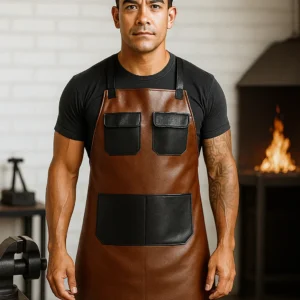
FurnaceBuilt Flame Leather Apron
Price range: $189.00 through $239.00 -
Select options This product has multiple variants. The options may be chosen on the product page

Grindcore Welding Leather Gear
Price range: $169.00 through $219.00 -
Select options This product has multiple variants. The options may be chosen on the product page
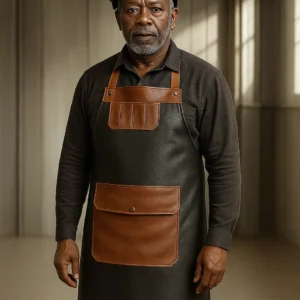
Weldsmith Elite Leather Apron
Price range: $179.00 through $229.00 -
Select options This product has multiple variants. The options may be chosen on the product page
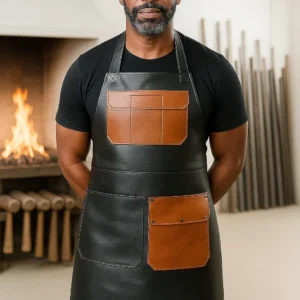
Arcbrim Leather Welding Apron
Price range: $179.00 through $225.00
Sparks don't care what you're wearing, so our leather welding aprons do the worrying for you. Each one is cut from thick, heavy-duty leather that takes sparks, spatter and the heat coming off the weld without giving up. There's a good reason welders have always reached for leather: it chars instead of melting, so it won't stick to your skin the way synthetic fabric can. We've made leather welding aprons for US welders and metal fabricators since 2017.
Built to take the heat
Our leather welding aprons are cut from thick, heavy-duty hide and finished with reinforced edge stitching, because a spark landing on a weak seam is how cheap aprons come apart. The full-length cut runs from your chest down past your knees, so your torso and thighs stay covered whether you're at the bench or sat at the grinder. Adjustable leather straps with riveted metal rings let you set the fit and carry the weight.

Pockets and sizing
There's a chest pocket for small tools or gauges and double front compartments for hammers, pliers or measuring rods, so this is a welding apron with pockets that earn their place. Aprons come in Small through 2XL, and every product page lists its exact pockets, panels, colours and sizing, along with real customer reviews.
How thick should a welding apron be?
For hot, sparky work you want heavy leather. As a rule of thumb, a leather welding apron around 1.5 to 2 mm and up gives you a solid barrier against slag and radiant heat. Thicker hide takes more abuse before it shows wear; slightly thinner hide moves more freely. Ours are built on the heavy-duty end so they hold up to real shop use.

Matching the apron to your welding
The right cover depends on the process. TIG work is lighter and more precise, so freedom of movement matters most. MIG, arc and stick throw far more spatter, so full chest-to-knee coverage earns its keep there. Whatever you run, leather gives you a heat barrier that coated fabric cannot match over time.
Why a bib-style leather welding apron?
Welding aprons turn up in a few cuts, and you'll see sleeved and split-leg versions sold elsewhere. Our welding aprons are full-length bib style, the cut most welders and fabricators reach for at the bench. Built from heavy full-grain leather, they give you broad chest-to-knee coverage against sparks, slag and heat while leaving your arms and legs free to move through MIG, stick and general fabrication work. For most welding, a tough leather bib is the protection and the freedom you actually want, without the bulk of heavier specialty gear.
How to choose a leather welding apron
A few things worth checking before you buy.
- Coverage. A full-length welding bib apron to the knee suits stick and heavy MIG; a shorter cut is fine for lighter TIG and fab.
- Hide and thickness. Heavier leather takes more heat and spatter before it shows wear.
- Stitching. Reinforced seams at the stress points so a stray spark doesn't open them up.
- Hardware. Riveted rings and adjustable straps you can set to your body.
- Pockets. Chest and front pouches for the tools you reach for, kept clear of direct spatter.

Leather or FR cotton?
FR cotton is lighter and washable, but it leans on a chemical treatment that fades over time. A heat resistant welding apron in heavy-duty leather doesn't rely on a coating. It physically blocks spatter and radiant heat and only gets more broken-in with use. For heavy spark work, a leather welding apron is the harder-wearing choice that holds up shift after shift.
Looking after your leather welding apron
Knock off the slag, wipe it with a damp cloth and let it dry away from any heat source. To soften the hide, rub in a little leather conditioner, let it absorb, then flex the leather gently; keep it away from direct heat, which stiffens and cracks it. Do that and it'll outlast every cotton apron you've ever owned.
Welding apron questions
Is leather good for welding?
Yes. Leather is naturally flame-resistant, it blocks spatter and heat, and it chars instead of melting onto your skin like synthetic fabric does. It is protective gear, not flame-proof, so wear it with the rest of your PPE.
How thick should a welding apron be?
For heavy spark work, look for heavy-duty leather around 1.5 to 2 mm or more. Thicker hide gives more protection; slightly thinner moves more freely.
Do you offer sleeved or split-leg welding aprons?
Our range is full-length bib-style, which covers you chest to knee while leaving your arms and legs free. It suits most bench, MIG and stick work. We do not currently stock sleeved or split-leg cuts.
What sizes do you offer?
Small through 2XL, with adjustable riveted straps so you can set the fit.
Will sparks wreck it?
Leather handles spatter far better than cloth. You'll get honest marks and patina over time, not holes burned through it.
How do I clean and soften it?
Brush off debris, wipe with a damp cloth, dry away from heat, and condition occasionally to keep it supple. Don't soak it.
Questions about sizing, care, or heat resistance? See our leather apron FAQ.